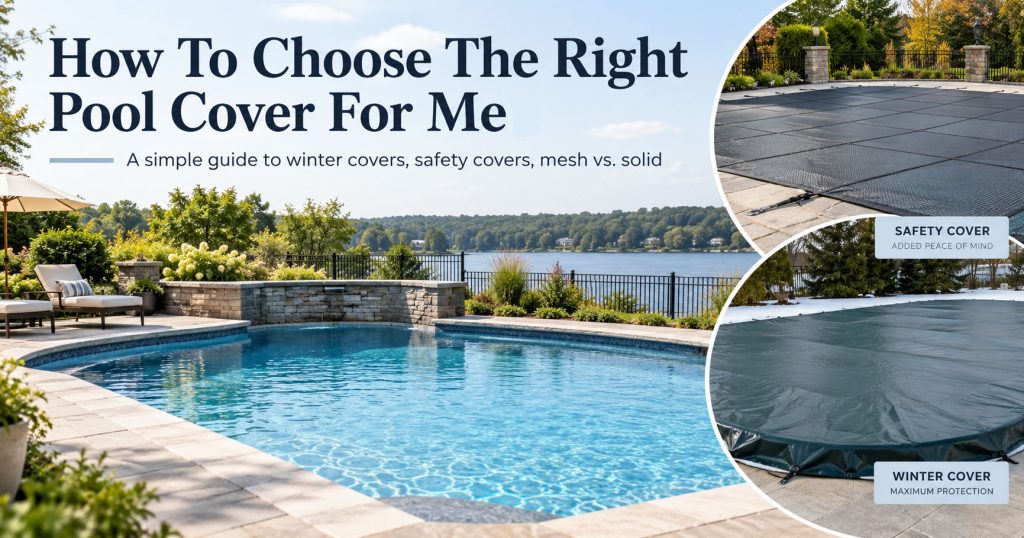
Choosing the right pool cover can feel more complicated than it should. At first glance, a pool cover seems like a simple product: something that goes over the pool when you are not using it. In reality, there are several different types of pool covers, and each one is designed to solve a slightly different problem.
Some pool owners want an affordable winter cover that keeps leaves and debris out. Others want a stronger cover that will last for many seasons. Some homeowners are looking for additional safety around the pool, while others want to reduce spring cleanup, limit algae growth, or make winter maintenance easier.
The best pool cover for you depends on your type of pool, your climate, your property, your budget, and what you expect the cover to do.
Understanding the differences before you buy can save money and frustration later.
Start With Your Type of Pool
The first thing to consider is whether you have an above-ground pool or an inground pool.
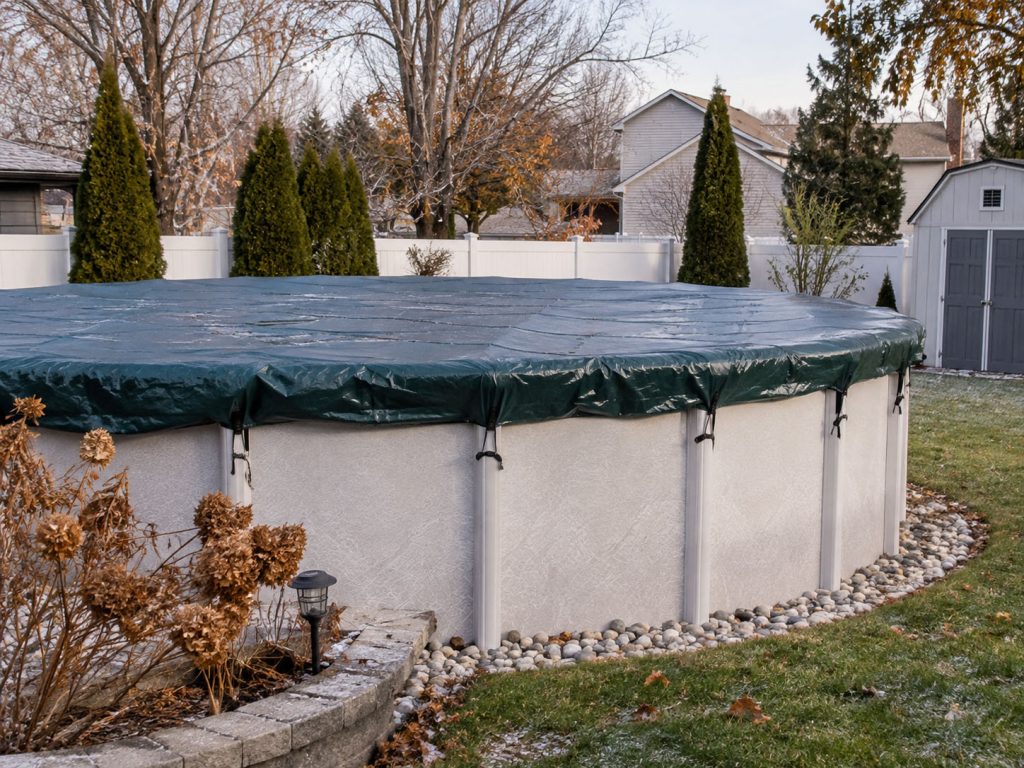
Above-ground pools most commonly use traditional winter covers that extend over the top of the pool and are secured around the outside wall. These covers are generally designed to protect the water from leaves, dirt, and winter debris. Inground pools have more choices. Depending on the pool and surrounding deck, you may be able to use a traditional winter cover, a heavy-duty solid winter cover, or a safety cover that anchors directly into the pool deck.
The shape of the pool matters too. Standard rectangular pools are usually the easiest to cover. Freeform pools, kidney-shaped pools, pools with attached spas, waterfalls, raised walls, unusual steps, or other features may need a custom-made pool cover.
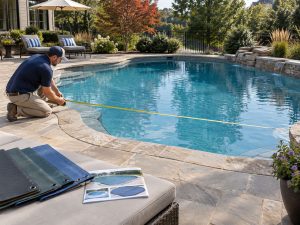
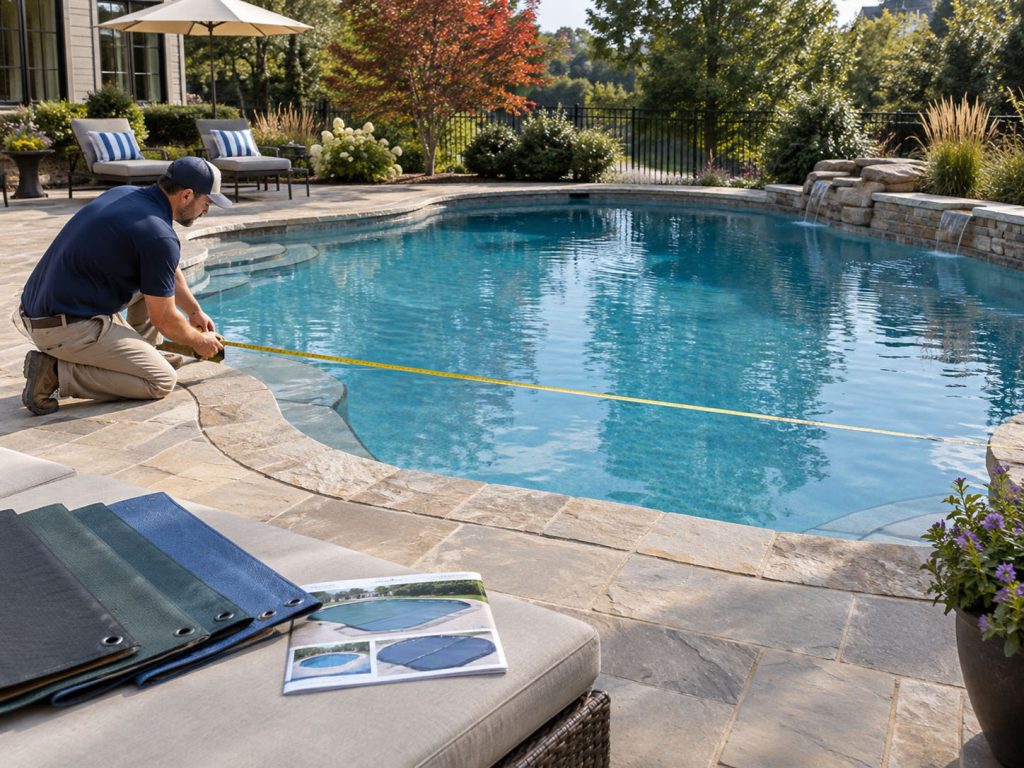
Before shopping for any replacement pool cover, accurate measurements are important. Even a high-quality cover will not perform properly if it does not fit the pool correctly.
Traditional Winter Pool Covers
Traditional winter pool covers are one of the most common and affordable options for protecting a swimming pool during the off-season. These covers are designed primarily to keep leaves, branches, dirt, insects, and other debris from entering the pool.
For inground pools, traditional winter covers usually overlap the pool deck and are secured with water tubes placed around the perimeter. Above-ground covers are generally held in place using a cable and winch system, cover clips, or other securing methods.
One of the biggest advantages of a traditional winter cover is price. They are typically less expensive than safety covers and can provide effective seasonal protection when installed correctly. However, standard winter covers may require more maintenance during the season. Rainwater, melted snow, leaves, and debris can collect on top of the cover. Depending on the type of cover, a cover pump may be needed to remove standing water.
For many pool owners, especially those looking for straightforward winter protection at a reasonable cost, a traditional winter cover remains a practical choice.
Heavy-Duty Winter Pool Covers
Some pool owners want the simplicity of a traditional winter cover but would prefer something stronger and more durable.
Heavy-duty winter covers are designed to provide additional resistance to tearing and damage compared with lightweight covers. Products such as Unrippable™ Pool Covers are intended for homeowners who want a more substantial cover without necessarily moving to a deck-anchored safety cover.
A heavy-duty cover may be especially useful if your pool is exposed to strong winds, falling branches, heavy leaf accumulation, or difficult winter conditions. Durability can also be an important consideration for homeowners who are tired of replacing inexpensive covers frequently.
Although a stronger cover may cost more initially, a longer service life can make it a better value over time.
What Is a Safety Pool Cover?
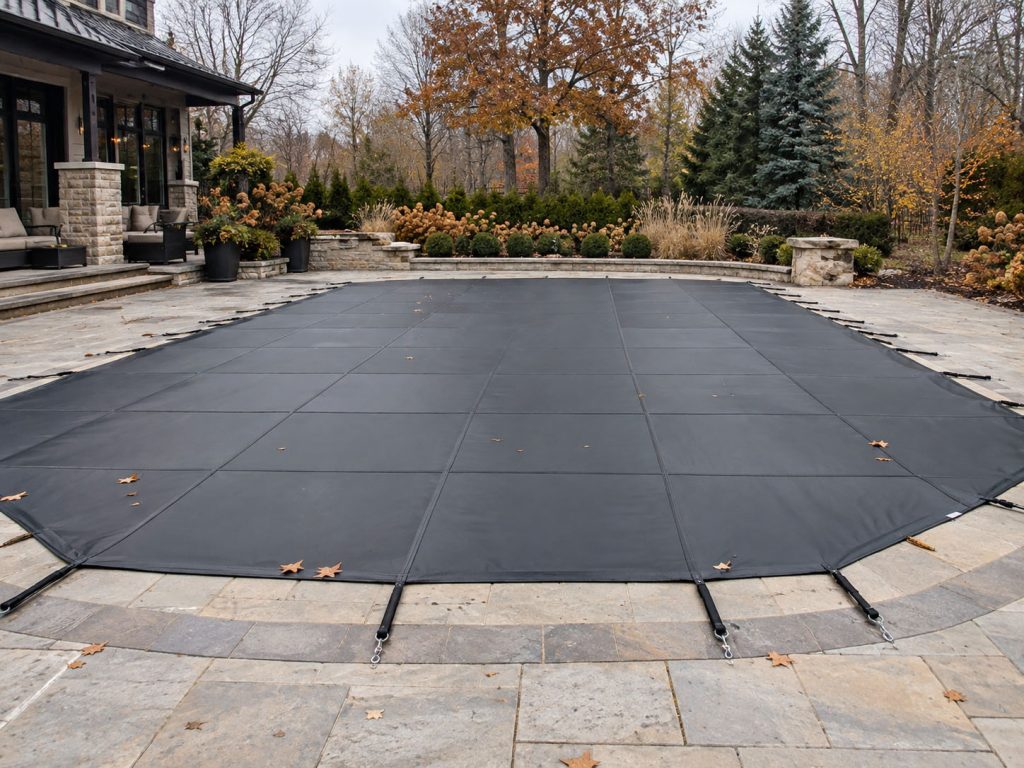
Safety covers are commonly used on inground swimming pools and are designed to be tightly secured over the pool using anchors installed in the surrounding deck.
Unlike traditional winter covers that rest on or near the water surface, safety covers are stretched across the pool under tension. This creates a cleaner, more finished appearance and helps keep the cover securely positioned throughout the off-season. Safety covers are especially popular with homeowners who want a long-term pool-cover solution and prefer not to use water tubes around the pool.
They are generally available in two main styles: mesh safety covers and solid safety covers.
Mesh Safety Covers
Mesh safety covers are made from strong woven material that allows rainwater and melting snow to pass through the cover and into the pool. One of the biggest advantages of mesh is reduced winter maintenance.
Because water drains through the material, you normally do not have to remove large amounts of standing water from the surface of the cover. Mesh covers are also typically lighter than solid covers, which can make installation and removal easier.
The tradeoff is that very fine particles and some sunlight can pass through the material. Depending on local conditions and the length of the off-season, this can contribute to dirt or algae in the pool by spring. Even so, many pool owners prefer mesh because of its durability, convenience, and relatively low maintenance during the winter.
Solid Safety Covers
Solid safety covers are designed to block sunlight, debris, and most outside water from entering the swimming pool.
Because sunlight is blocked, solid covers can help reduce algae growth during the off-season. Many homeowners find that this results in cleaner water when the pool is reopened. Solid covers can be especially appealing in areas with large amounts of pollen, dust, fine debris, or falling leaves.
The main consideration is water management. Since rain and melted snow cannot simply pass through the material, that water must be removed from the surface. Some solid covers use an automatic cover pump, while others may include built-in drainage panels.
Solid safety covers are generally heavier than mesh covers, which can make installation and removal more demanding. For homeowners focused on keeping the pool water as isolated as possible during the winter, however, a solid cover can be an excellent option.
Standard or Custom Safety Cover?
Many standard-size pools can use stock safety covers, but not every pool is built to a standard shape.
Custom safety covers are made specifically for the dimensions and features of an individual swimming pool. You may need a custom cover if your pool includes unusual curves, attached spas, waterfalls, rocks, raised bond beams, ladders, diving stands, special steps, or other features that affect how the cover must be installed.
Manufacturers such as Loop-Loc produce custom safety covers for a wide range of inground pool designs. If you are replacing an existing safety cover, it may also be possible to have a replacement made from the measurements or specifications of the original cover. The goal is a secure fit that works correctly with the shape of your pool and surrounding deck.
Think About Your Surroundings
Your property can help determine which type of pool cover makes the most sense.
If your pool is surrounded by trees, keeping leaves and branches out may be one of your biggest priorities. A solid cover may provide better protection from very fine debris, while a mesh safety cover may be more convenient if you receive frequent rain and do not want to manage standing water.
If your area receives heavy snow, strong winds, or severe winter weather, overall strength and installation become especially important. Pools located in more open areas may experience different challenges than pools protected by fences, landscaping, or nearby structures. There is no single cover that is automatically best for every location.
Consider Winter Maintenance
Another useful question is how much work you want to do during the off-season.
Traditional solid winter covers may require periodic pumping and debris removal. Solid safety covers may also require a pump unless they have a drainage system. Mesh safety covers generally require less water management because rain drains through the material.
However, some pool owners are perfectly comfortable checking their cover regularly throughout the winter, while others want the lowest-maintenance system possible. Knowing your own preferences can help narrow the decision quickly.
Think About Spring Pool Opening
Your pool cover can also affect what happens when it is time to reopen the pool.
If significant dirt, debris, or sunlight reaches the water during the winter, additional cleaning and chemical treatment may be needed in the spring. Solid covers can help limit both sunlight and outside debris, which may make spring cleanup easier.
Mesh covers trade some of that isolation for easier drainage and reduced winter maintenance. Neither approach is automatically better. It depends on whether you prefer to do more maintenance during the winter or potentially more cleanup in the spring.
Price Versus Long-Term Value
Budget is naturally part of the decision, but the least expensive cover is not always the least expensive choice over several years.
A basic winter cover may be completely adequate for many pool owners. If it protects the pool properly and meets your needs, there may be no reason to buy something more complicated. On the other hand, homeowners planning to stay in their home for many years may prefer to invest in a durable safety cover or heavy-duty winter cover.
Consider the initial price, expected lifespan, ease of installation, maintenance requirements, and replacement frequency. Long-term value is often more important than the lowest purchase price.
So, Which Pool Cover Should You Choose?
The right pool cover is the one that matches your pool and your priorities.
If you want simple and economical winter protection, a traditional winter cover may be the best fit. If you want additional durability without moving to a deck-anchored system, a heavy-duty winter cover may make sense. If you want a secure, long-term solution for an inground pool, a safety cover may be worth considering.
Choose mesh if easy drainage and reduced winter maintenance are high priorities. Choose solid if blocking sunlight and keeping outside water and fine debris away from the pool are more important. Most importantly, make sure the cover fits your pool correctly and is installed according to the manufacturer’s instructions.
A properly selected pool cover can protect your pool investment, reduce off-season maintenance, and make opening the pool much easier when warm weather returns.
Need A New Pool Cover? Check Out The Pool Covers that PoolAndSpa.com Has On Sale Now!